
Meet artist Hannah Waldron
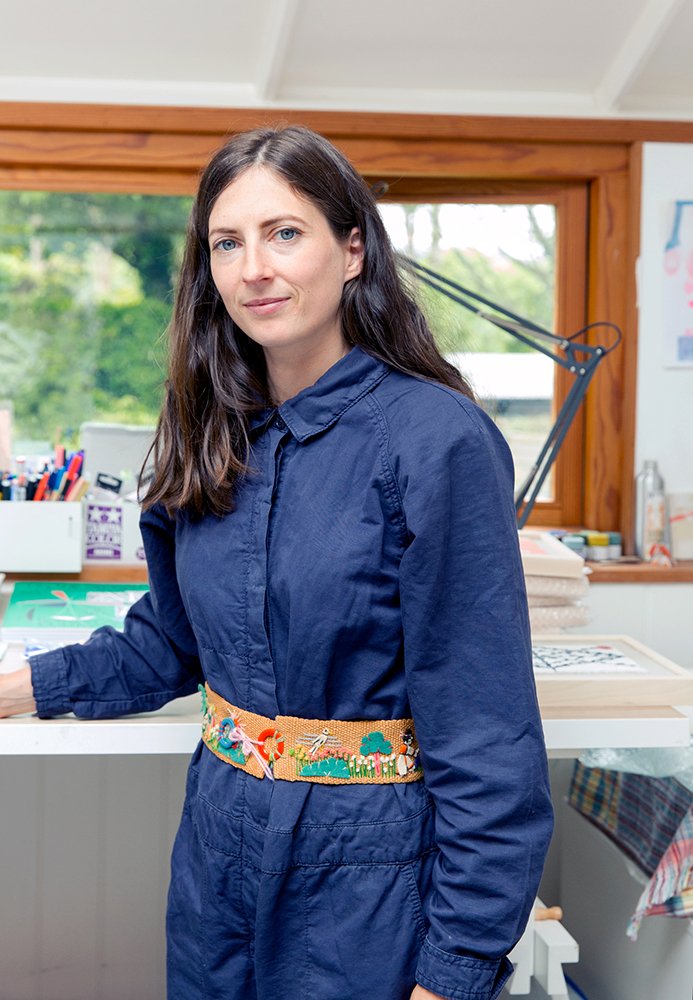
Can you tell us a bit about yourself, which influences were important to you and how did your way into the art field unfold?
From an early age drawing, creating and making became a clear space of possibility for me. A necessity and a way of being. I was fortunate to be encouraged to pursue this space by family and teachers, and art school became the most obvious path for me to take - it was such a part of how I operated and navigated the world. It wasn't always easy or fun because of the work and energy involved in putting so much of yourself into creating, but it was always important to me and something I couldn't not do.
Kannst du uns ein wenig über dich erzählen, welche Einflüsse waren für dich wichtig und wie ist dein Weg in die Kunst verlaufen?
Schon früh wurden Zeichnen, Gestalten und das Herstellen von Dingen für mich zu einem klaren Raum der Möglichkeiten – zu einer Notwendigkeit und einer Art des Seins. Ich hatte das Glück, von meiner Familie und von Lehrkräften darin bestärkt zu werden, diesen Raum weiter zu verfolgen, und die Kunsthochschule wurde für mich der naheliegendste Weg. Kunst war ein so grundlegender Teil davon, wie ich die Welt wahrnahm und mich in ihr bewegte. Es war nicht immer einfach oder nur freudvoll, angesichts der Arbeit und der Energie, die es erfordert, so viel von sich selbst in das eigene Schaffen zu legen. Aber es war mir immer wichtig – und etwas, das ich nicht nicht tun konnte.
And in addition to that: You studied illustration in the UK and then a master in textile art in Sweden. How came your development from paper and paints to wool and weaving? And how do both influence your practice today?
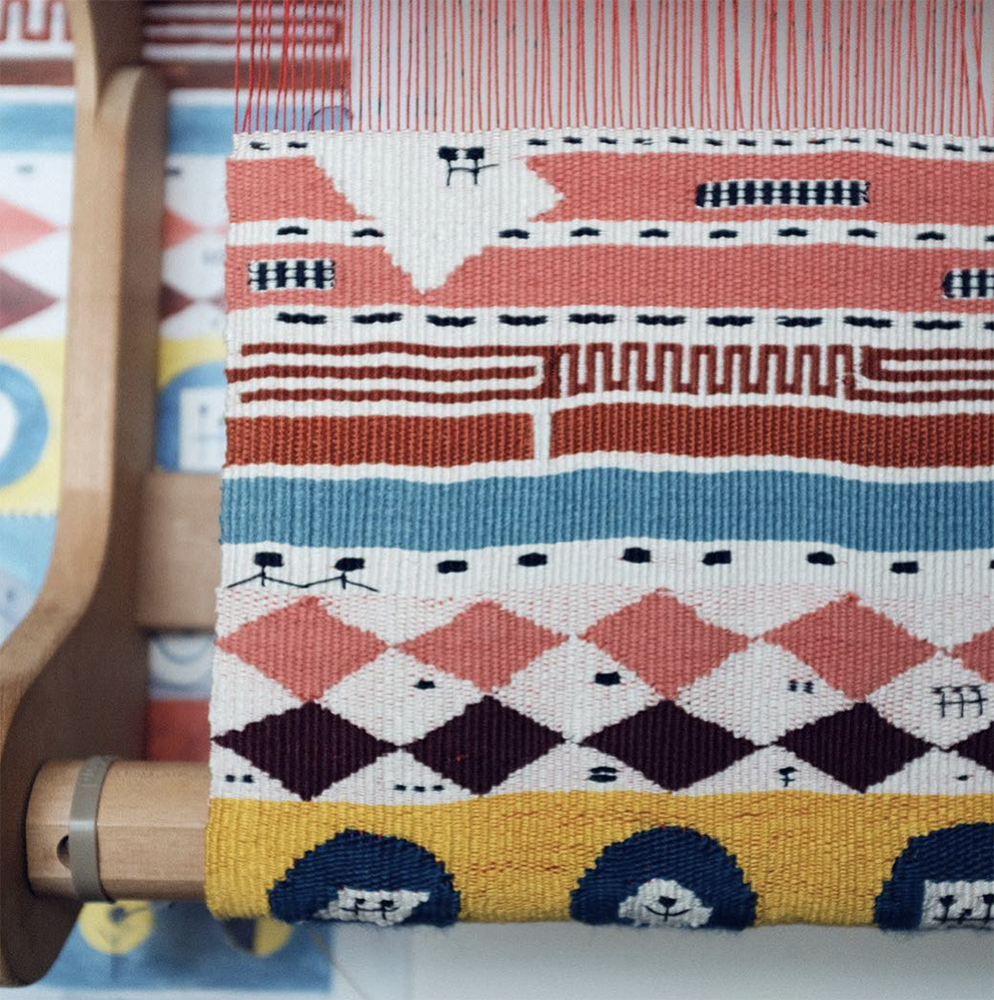
After art foundation in London, I studied Illustration at Brighton University as it appeared to be the most open and experimental course in terms of access to facilities and processes. I wasn't so interested in briefs and the commissioned aspects of illustration, but rather within the craft of exploring ideas and subject matter visually and materially, and sometimes within the sequential.
Unfortunately the education system within the UK limits students on the number of creative subjects they can take. I chose fine art and graphics and was unable to also take textiles. So it wasn't until I’d left my undergraduate BA and was living in Berlin and saw the Bauhaus textiles that I began to be tuned in to the possibilties with weaving and colour used in these materials.
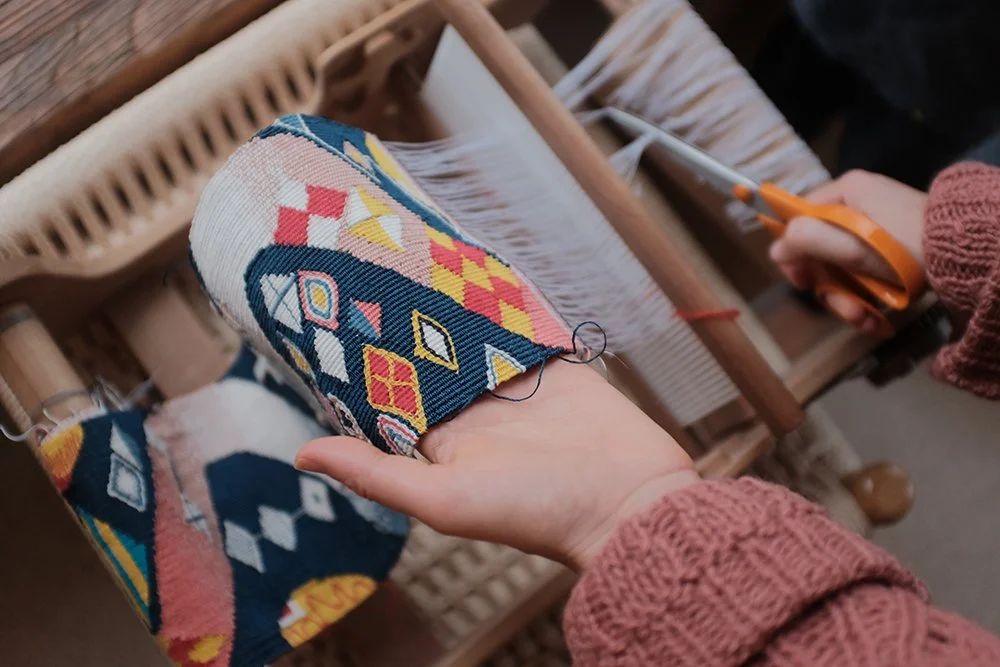
That’s why I went to Sweden to do a MFA in Textiles in the Expanded Field, as a way to investigate the process and material languages of textiles and weaving there at Konstfack, Stockholm. From there, for many years I immersed myself in textiles, especially weaving generally, dazzled by it, in an enchanted way. However a few years ago I recognised a need to reconnect to drawing and painting practice as a way to re-enchant the imaginal possibilities and expansion of the ideas I wanted to explore.
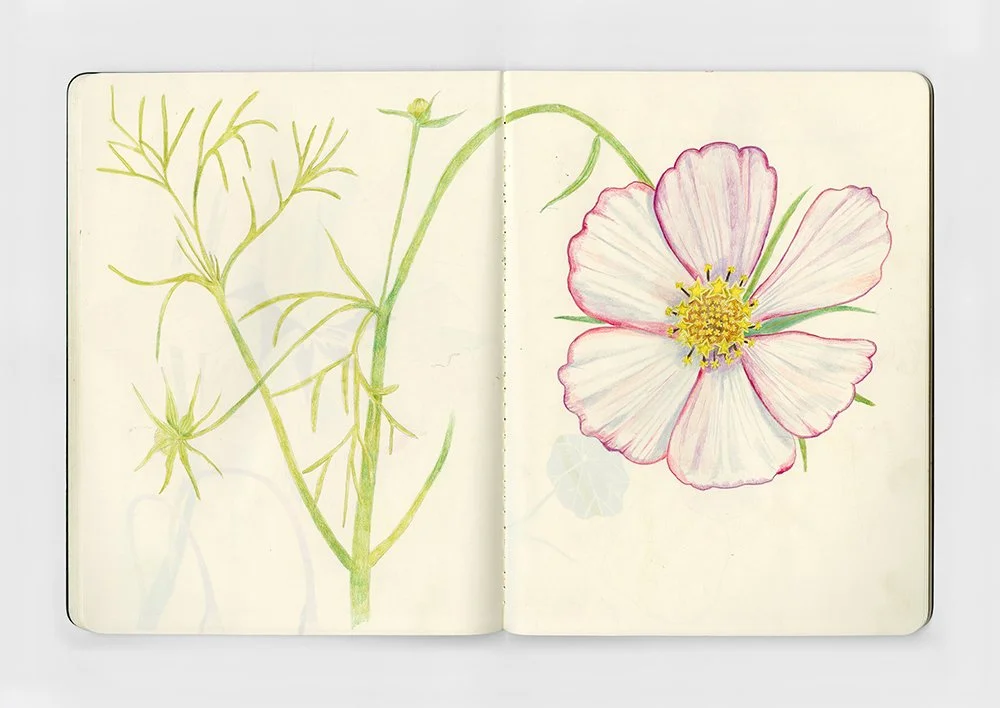
Now they are regaining some balance between them, I see the drawing and painting as integral to the installation work with weaving. Drawing especially becomes a place of observing and witnessing and accessing a space-time of attention, focus and imagination that goes beyond language, to a receptive relational wavelength of attuning. It allows a way of relating an experience of the world, in a way that seems to amplify relational dynamics, for example I found even drawing a cut flower on my kitchen table with this kind of attention to allow it to vibrate. Silence amplifies, time and space contract and expand, the kids join me to draw, and we all become in relation to our own experiences, traces of which remain on the paper, it is an active space of thinking, un-thinking and sensing.
The things I sense, my intuitions about the experience I’m having in the universe, are what I'm trying to materialise in the weaving. Weaving often acts as a material metaphor in this way, it’s been used like this across many cultures historically. I try to continue this approach as I believe myth is such a human way of navigating the world.
Du hast Illustration in England studiert und anschließend einen Master in Textilkunst in Schweden gemacht. Wie kam es zu deiner Entwicklung von Papier und Farbe hin zu Wolle und Weben? Und wie beeinflussen sich diese Bereiche heute gegenseitig in deiner Praxis?
Nach einem Art Foundation Year in London habe ich Illustration an der Universität Brighton studiert, da der Studiengang sehr offen und experimentell war, besonders in Bezug auf Werkstätten, Materialien und Prozesse. Mich interessierten weniger Auftragsarbeiten, sondern das Erkunden von Ideen und Themen – visuell, materiell und teilweise auch sequenziell.
Das britische Bildungssystem erlaubt nur eine begrenzte Anzahl kreativer Fächer, sodass ich Textilien erst später kennenlernen konnte. In Berlin, nach meinem Bachelor, stieß ich auf Bauhaus-Textilien und begann, mich für die Möglichkeiten von Weben und Farbe zu öffnen. Deshalb ging ich nach Schweden, um an der Konstfack in Stockholm einen MFA in Textiles in the Expanded Field zu absolvieren und die Prozesse und Materialien der Textilkunst intensiv zu erforschen. Für viele Jahre tauchte ich tief in Weberei und Textilien ein, fasziniert und beinahe verzaubert von dieser Arbeit.
Vor einigen Jahren spürte ich das Bedürfnis, wieder stärker zur Zeichnung und Malerei zurückzukehren, um die imaginativen Möglichkeiten und die gedankliche Weite meiner Themen neu zu beleben. Heute finden beide Bereiche allmählich wieder ein Gleichgewicht. Zeichnung und Malerei sind integrale Bestandteile meiner installativen Arbeiten mit Weberei.
Gerade die Zeichnung wird für mich zu einem Ort des Beobachtens und Bezeugens, zu einem Zugang zu einer Raum-Zeit der Aufmerksamkeit, Konzentration und Imagination, die über Sprache hinausgeht – hin zu einer empfänglichen, relationalen Ebene des Sich-Einstimmens. Sie eröffnet eine besondere Beziehung zur Welt, in der Relationalität intensiv erfahrbar wird – etwa wenn selbst eine geschnittene Blume auf dem Küchentisch durch das Zeichnen zu vibrieren beginnt. Stille verstärkt sich, Zeit und Raum ziehen sich zusammen und dehnen sich aus, die Kinder setzen sich dazu und zeichnen mit, und wir alle treten in Beziehung zu unseren jeweiligen Erfahrungen, deren Spuren auf dem Papier zurückbleiben. Es ist ein aktiver Raum des Denkens, Ent-Denkens und Spürens.
Was ich wahrnehme – meine Intuitionen über die Erfahrung, die ich im Universum mache – versuche ich im Weben zu materialisieren. Weberei fungiert dabei oft als materielle Metapher; sie wurde historisch in vielen Kulturen auf diese Weise genutzt. Ich versuche, diesen Ansatz weiterzuführen, weil ich glaube, dass Mythos eine zutiefst menschliche Art ist, sich in der Welt zu orientieren.
What does the work with yarn and its materiality mean to you?
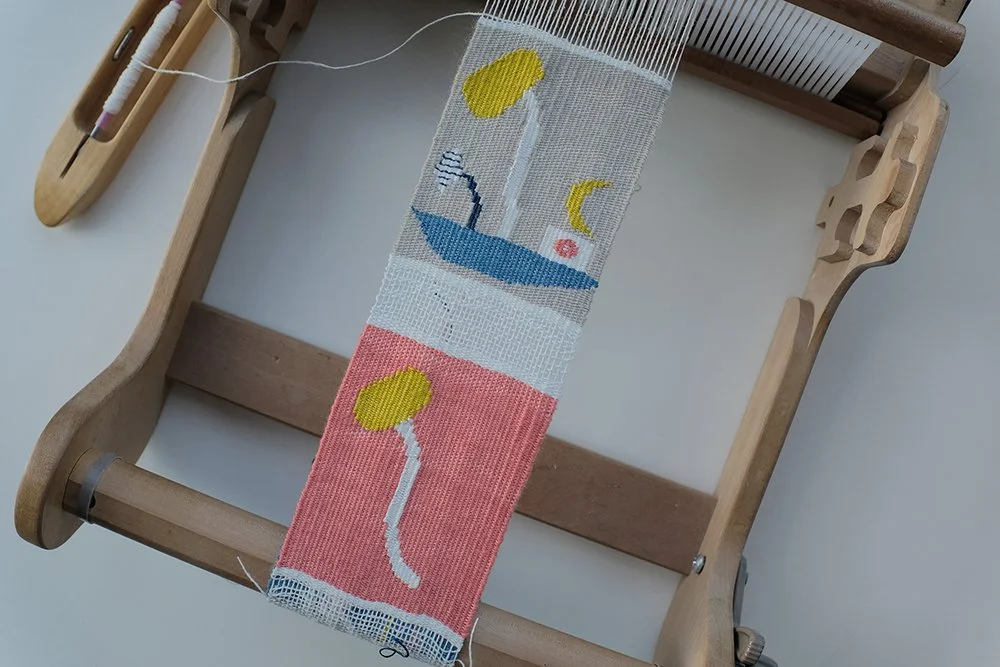
The yarn is spun from animal and plant fibres then dyed with natural dyes, predominantly plant extracts. The ecological connection is fundamental to its materiality. The material and process of weaving acts as metaphor but also embodiment of what I believe is the intrinsic qualities of our universe - relationality. The very structure of the interlacing of warp and weft speaks of this enmeshed network of interconnectivity.
The colour is phenomenal, both in the sense of its remarkable nature and impression on viewing, but also through the way we each perceive it by. our senses and immediate experience, it can never be objective - how we see and experience, the yarn, colour is dependent on light conditions, our own visual acuity, our subjective experience and the context in which it is seen. It is my hope that though experiencing the work directly, the viewer will get a reminder of this phenomenological experience and an ecological connection to be imparted somehow.
Was bedeutet die Arbeit mit Garn und seiner Materialität für dich?
Das Garn wird aus Tier- und Pflanzenfasern gesponnen und vorwiegend mit Pflanzenfarben gefärbt. Seine ökologische Verbindung ist grundlegend für seine Materialität. Weben wird für mich so zu einer Metapher – und zugleich zu einer Verkörperung dessen, was ich für eine grundlegende Qualität unseres Universums halte: Relationalität. Schon die Struktur des ineinandergreifenden Kett- und Schussfadens erzählt von diesem vernetzten Geflecht gegenseitiger Verbundenheit.
Die Farbe selbst ist phänomenal – sowohl in ihrer Beschaffenheit und Wirkung auf den Betrachter, als auch in der Art, wie wir sie wahrnehmen. Sie kann nie völlig objektiv sein: Wie wir Garn und Farbe erleben, hängt von Licht, unseren Sinnen, unserer subjektiven Erfahrung und dem jeweiligen Kontext ab.
Mein Wunsch ist, dass die direkte Begegnung mit der Arbeit dem Betrachter eine Erinnerung an diese phänomenologische Erfahrung vermittelt und zugleich eine spürbare ökologische Verbindung eröffnet.
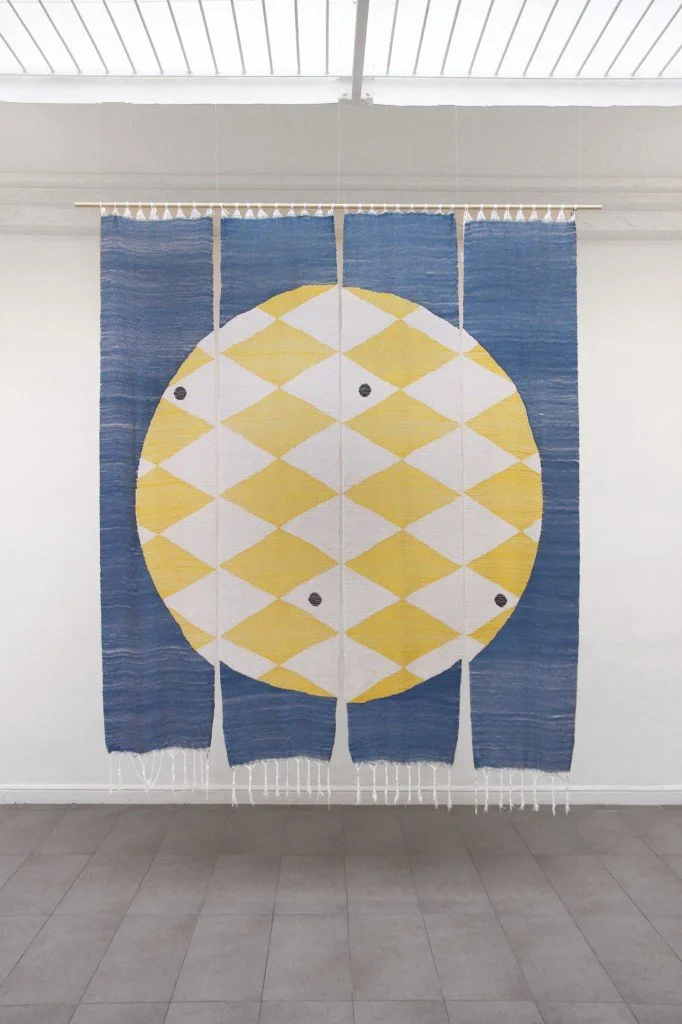
Your practice is strongly rooted in traditional craftsmanship and at the same time you found a way to express yourself far beyond a beautiful design. What do your weavings tell?
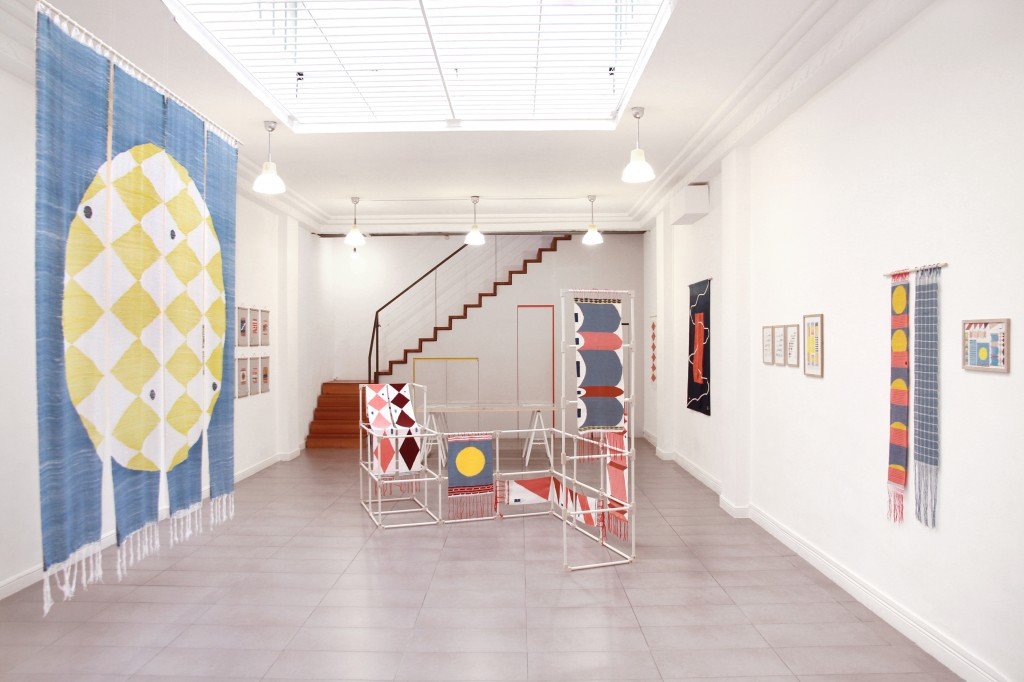
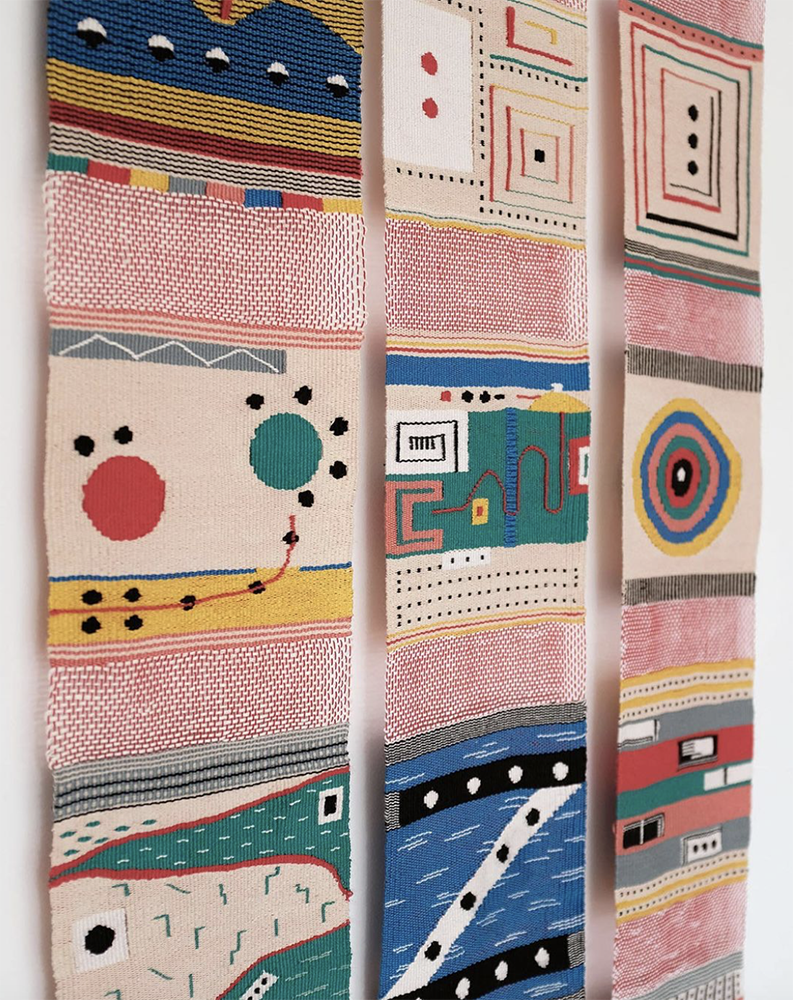
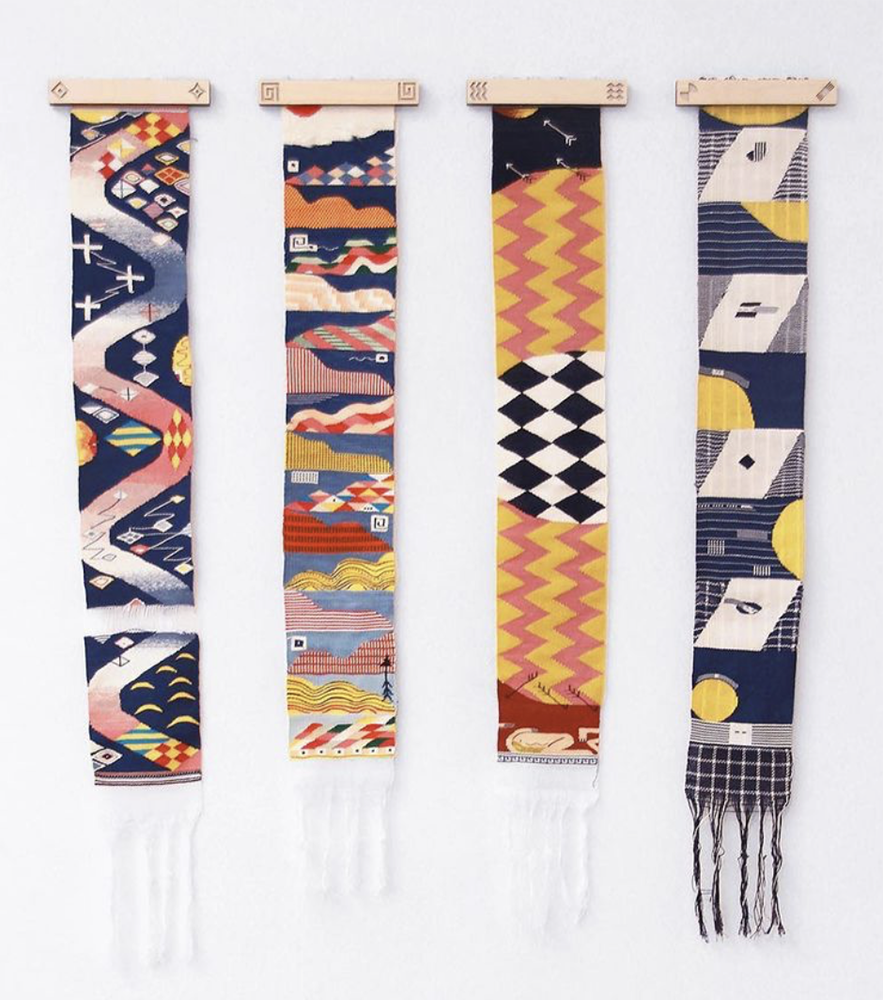
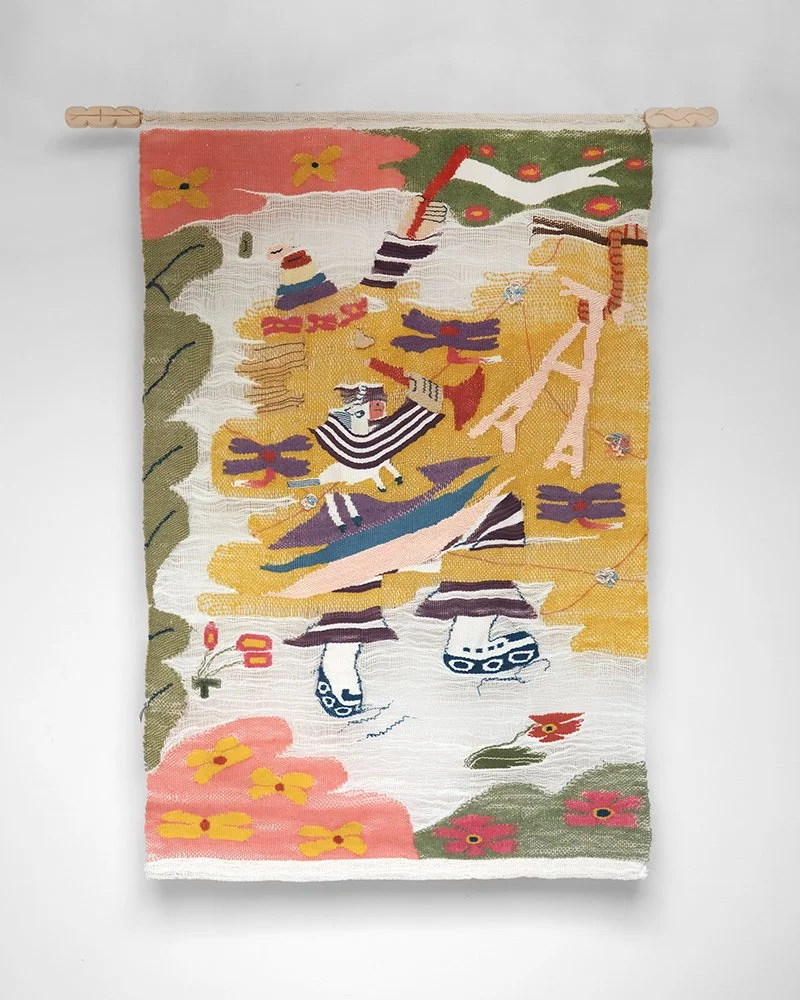
Throughout my 15 years of working with weaving, the word I have most often used to describe them has been that of a map. My early weavings were called Map Tapestries and acted as visual-material subjective maps of places that had a significant impact on me as a person. Cartographies of my felt experience mapped out through the senses.
I have also created weavings that have more narrative qualities, relating to poems and myths that emphasise the metaphoric and world-building qualities of weaving.
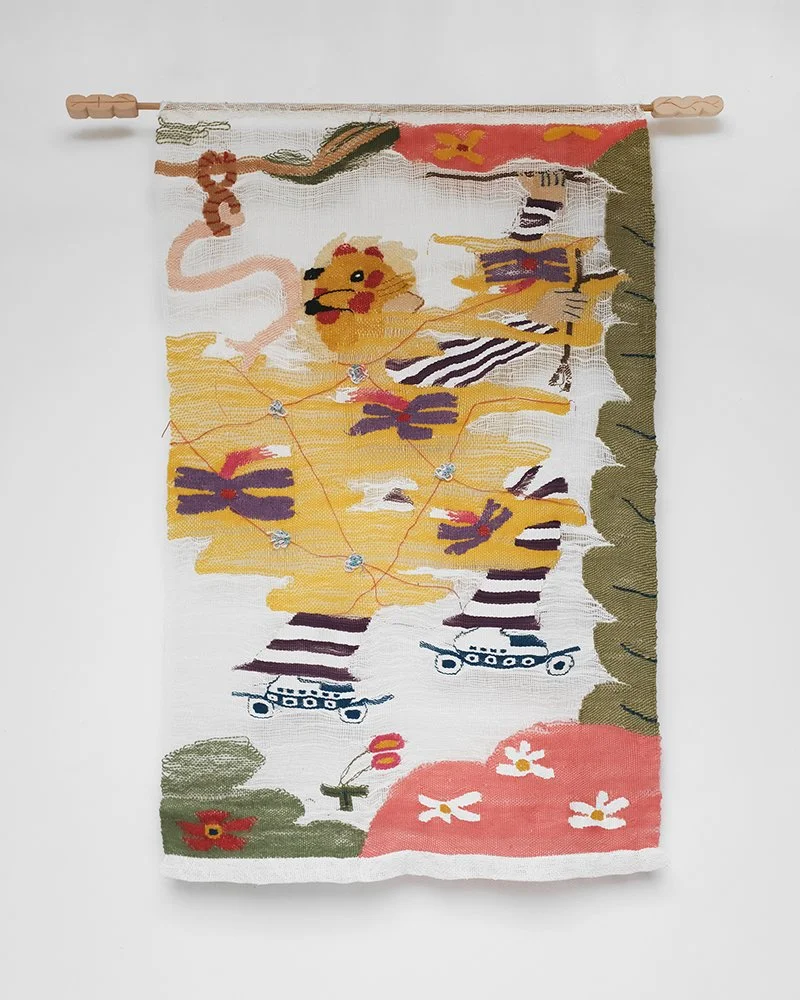
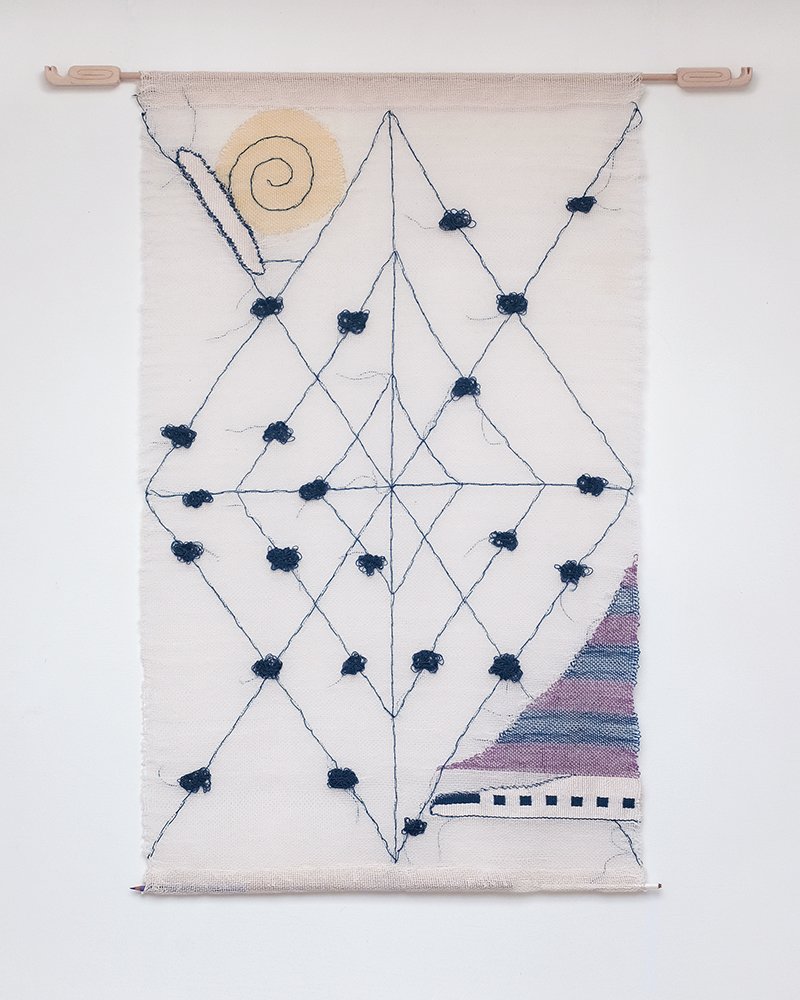
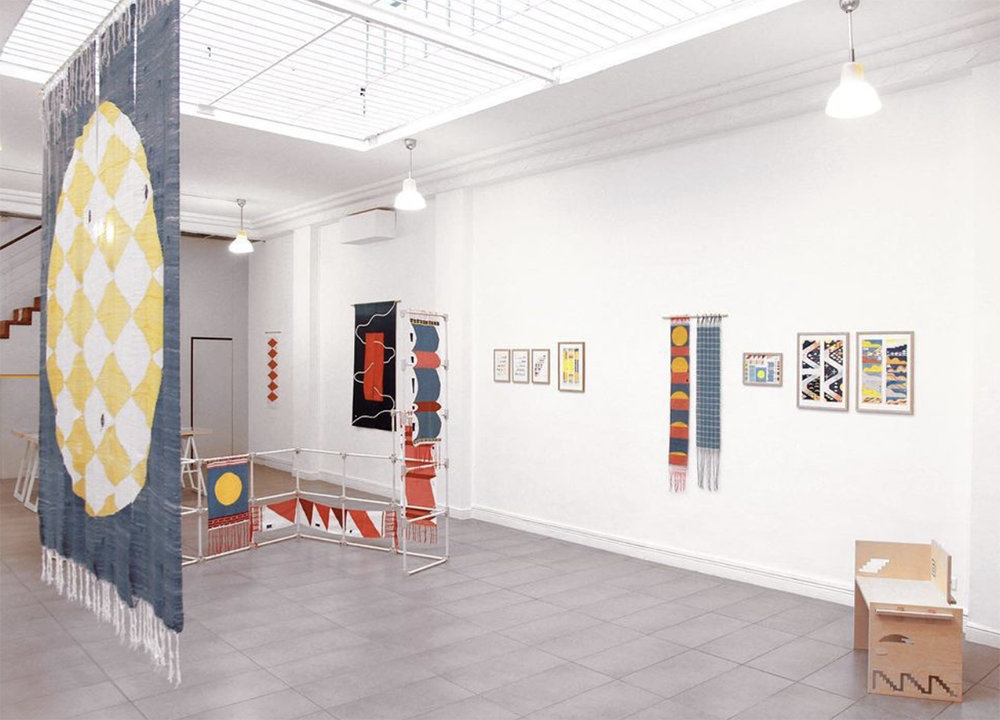
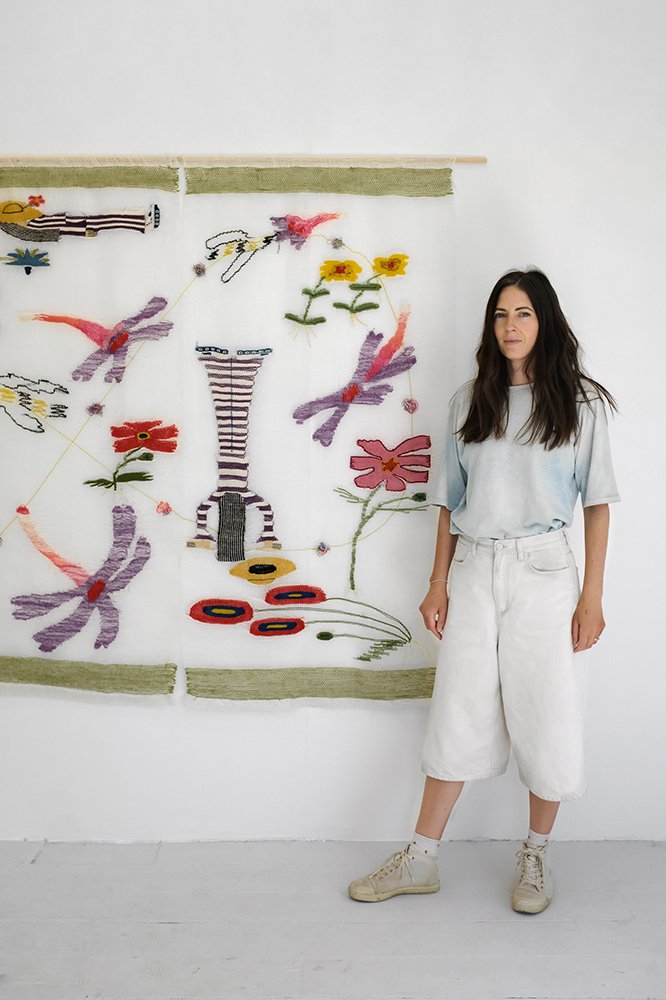
But most recently they relate more specifically to world-building around ecological connection, through a storyworld I have been creating work around called Pestalo, an imaginary place rooted in ideas around permaculture, intergenerational wisdom, craft, and play, through a journey a group of unruly school children take into the forest. Alongside the pieces that contain more figurative elements of this storyworld, are larger pieces that aim to embody the essence of the ideas - embodying the entanglents of human and non-human and making the invisible more present through the material gesture. I was really interested by something Ruth Asawa said in a recorded interview about craft because of the relationship between effort and affect and how something happens when you put in enough effort to let the material become something itself - I can really relate to this through my own experience with working with the material.
Recently I’ve noticed the importance of the transparency of the weave and the openness in the weaving inviting a liminality - a sense of hopefulness to see beyond the dominant discourses and imaginations.
Deine Praxis ist stark in traditionellem Handwerk verwurzelt, und gleichzeitig hast du einen Weg gefunden, dich weit über schönes Design hinaus auszudrücken. Was erzählen deine Webarbeiten?
In meinen 15 Jahren mit Weberei habe ich sie oft als Karten beschrieben. Meine frühen Arbeiten nannte ich Map Tapestries – subjektive, visuell-materielle Karten von Orten, die mich geprägt haben, erfasst über die Sinne.
Später entstanden Arbeiten mit stärker narrativer Qualität, inspiriert von Gedichten und Mythen, die die metaphorische und weltbildende Kraft des Webens betonen. Heute beziehen sich viele meiner Werke auf ökologische Weltgestaltung: im imaginären Universum Pestalo, einem Ort, der Permakultur, generationenüberliefertes Wissen, Kreativität und Spiel verbindet. Die Geschichten begleiten eine Gruppe ungestümer Kinder im Wald. Neben figurativen Arbeiten gibt es größere Stücke, die das Wesentliche dieser Ideen verkörpern – die Verflechtungen von Menschlichem und Nicht-Menschlichem sichtbar machen und das Unsichtbare durch die materielle Geste gegenwärtig werden lassen.
Besonders fasziniert hat mich ein Gedanke von Ruth Asawa über Handwerk: Wenn man genügend Mühe aufbringt, kann das Material selbst etwas Eigenes werden. Diese Erfahrung kann ich gut nachvollziehen.
In jüngster Zeit ist mir auch die Bedeutung der Transparenz des Gewebes und der Offenheit bewusst geworden. Sie schaffen eine Art Liminalität – eine „Schwelle“ zwischen Bekanntem und noch nicht Erkundetem – ein Gefühl der Hoffnung, über die dominante Diskurse hinausblicken zu können.
Which role does nature play in your artwork?
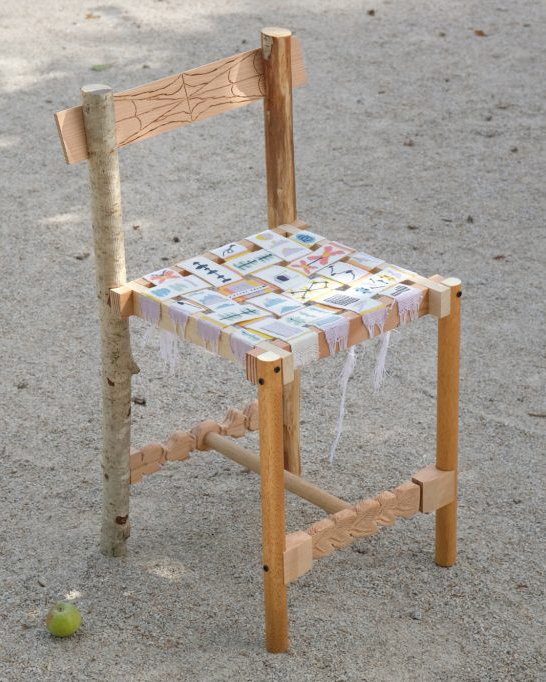
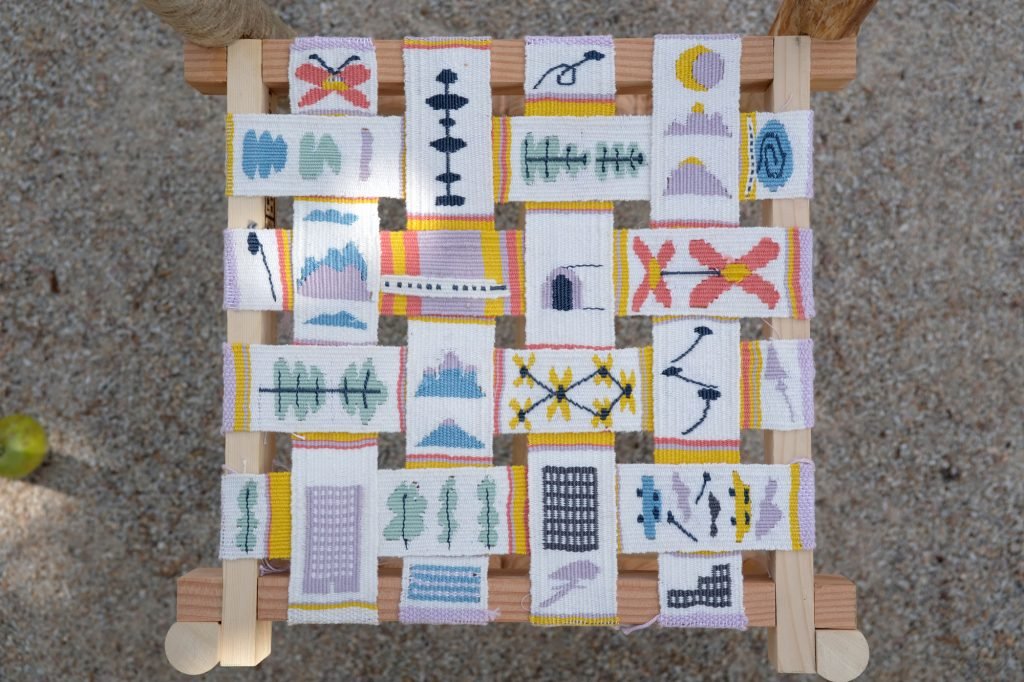
I grew up in London and lived in cities until I was 30. For the last 10 years I have lived in Cornwall and have worked in a studio situated in a community garden. This has definitely had an impact on the work I have made. Also during this time period I have had two children which has also connected me to nature through the time I’ve had to spend there with them, and also witnessing and responding to their inherent ways of being - their intuition and wildness in the way they relate to the world. Much of the work I am currently making in the Pestalo work is informed by them. Integrating these experiences with the imagined, as well as working with materials and processes more rooted in nature, points towards a place (for me) of becoming more entangled myself. I’m not so interested in the paint can of unlimited options, and for me, limitiations of what we can directly work within our own locality is more exciting.
Welche Rolle spielt die Natur in deiner Kunst?
Ich bin in London aufgewachsen und habe bis zu meinem 30. Lebensjahr in Städten gelebt. Seit zehn Jahren wohne ich in Cornwall und arbeite in einem Atelier in einem Gemeinschaftsgarten – diese Nähe zur Natur hat meine Arbeit stark geprägt. Auch meine Kinder haben mich auf besondere Weise mit der Natur verbunden, durch die Zeit draußen und das Beobachten ihrer intuitiven, wilden Art, die Welt wahrzunehmen. Viel von dem, was ich aktuell für das Pestalo-Projekt gestalte, ist von diesen Erfahrungen inspiriert. Die Verbindung von persönlichen Erlebnissen mit dem Imaginären sowie das Arbeiten mit Materialien und Prozessen, die in der Natur verwurzelt sind, führt für mich zu einer stärkeren Verflechtung mit meiner Umgebung. Ich interessiere mich weniger für unbegrenzte Möglichkeiten; spannender sind für mich die Begrenzungen dessen, was wir direkt in unserer eigenen Umgebung gestalten können.
You divide your work into teaching and studio work and you are also a young mother. Can you take us a bit into your daily life? How do you manage (time?) to combine all areas?
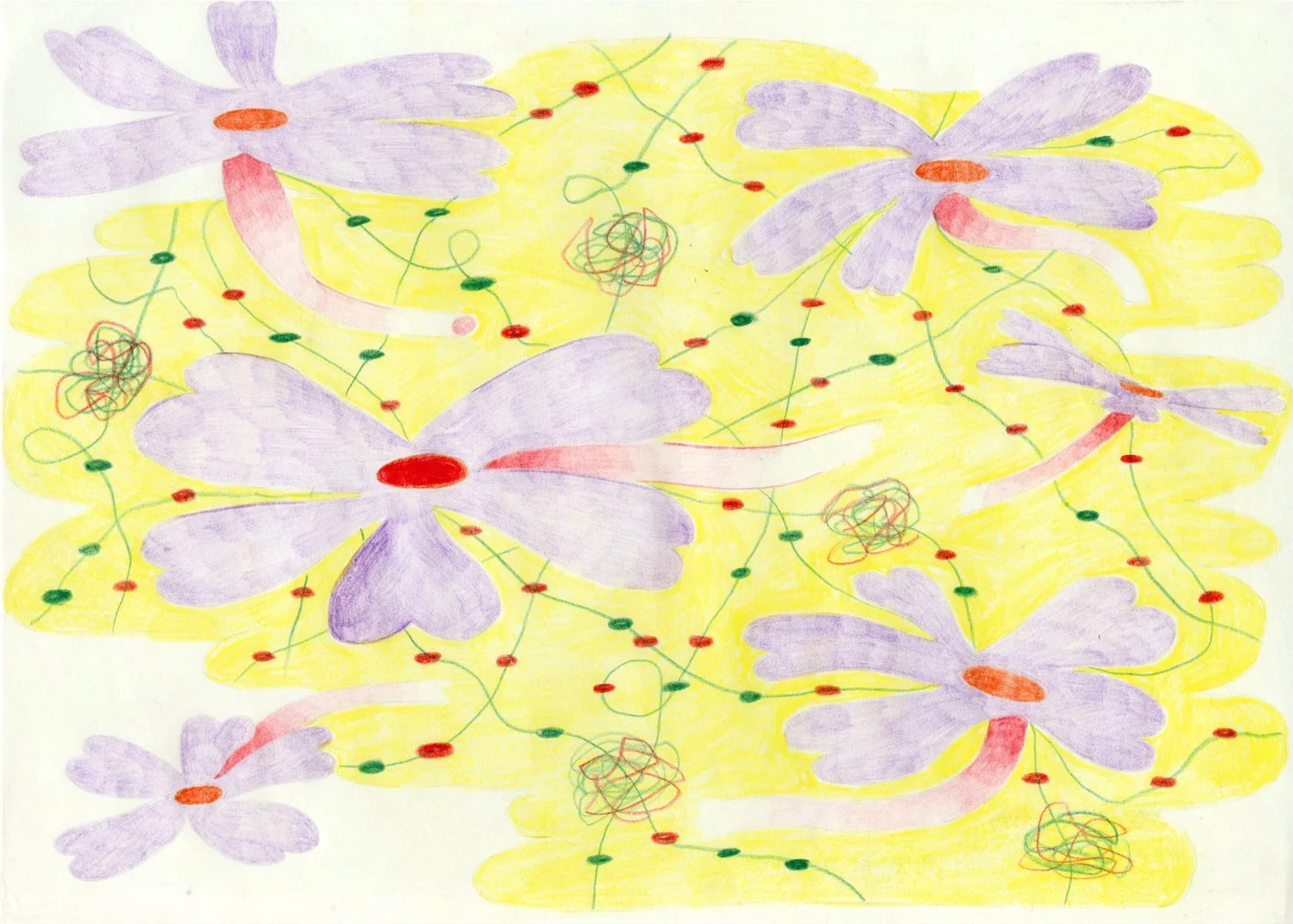
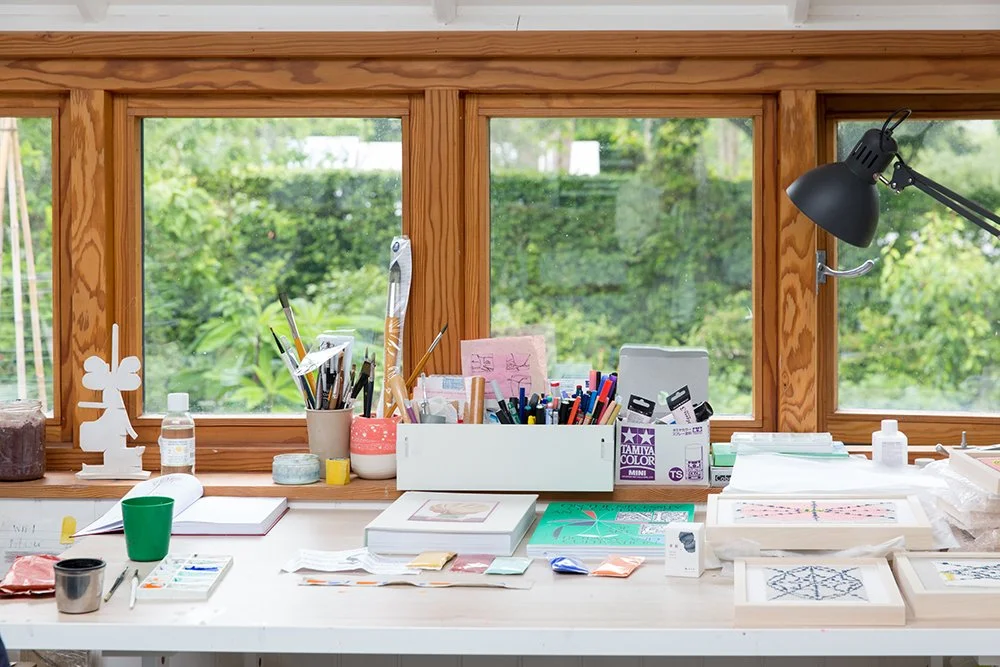
I’m managing two days in the studio at the moment alongside teaching, and parenting. But since I’ve had children I have shifted to cultivating a daily practice - even if it’s just 10 minutes through either daily weaving or drawing in a sketchbook. I’m just publishing two new zines that collects together a year of daily sketchbook drawing in each, one made during 2024 documenting my attention being drawn towards the boticanical world Something Like Static, and this year At the Blue Table, which documents flowers brought back from my allotment and observed through drawing sitting around the kitchen table with my kids. I recently memorised the poem Days by Philip Larkin, which I think captures the intention of what daily practice can do to help me navigate this stage of my life. Life is very repetitive when you have kids at school, but at the same time it is precious and fleeting when you take into account what life can throw at us. Days come, over and over, the growth and change is sometimes unperceivable, but it’s there, emerging. So I’m trying to find something in the tempo of the everyday, my favourite part is the little notes and drawings the kids leave, the ephemera which captures a part of that magic space of imagination we can try to find in the everyday.
Du teilst deine Zeit zwischen Lehre und Atelier und bist außerdem Mama. Kannst du uns einen Einblick in deinen Alltag geben?
Zurzeit arbeite ich zwei Tage pro Woche im Atelier, daneben unterrichte ich und kümmere mich um meine Kinder. Seitdem ich Mutter bin, habe ich eine tägliche Praxis entwickelt – selbst wenn es nur zehn Minuten Weben oder Zeichnen im Skizzenbuch sind. Gerade veröffentliche ich zwei neue Zines: Something Like Static dokumentiert 2024 meine Aufmerksamkeit für die Pflanzenwelt, At the Blue Table zeigt Blumen von meinem Schrebergarten, die ich mit meinen Kindern am Küchentisch beobachte und zeichne.
Das Gedicht Days von Philip Larkin beschreibt für mich die Kraft der täglichen Praxis: Sie hilft, den Rhythmus des Alltags zu spüren, in dem Wiederholung und Wandel zugleich präsent sind. Besonders mag ich die kleinen Zeichnungen und Notizen der Kinder – flüchtige Spuren, die einen Teil der magischen Räume der Vorstellungskraft im Alltag sichtbar machen.
What is important to you while teaching? What would you like your students to take with them?
For them to locate an internal voice - an inner world of the imaginal, or simply to just pick up tools and make without judgment to fully explore what comes from cultivating intuitive practices. To begin to listen to that intuition and find a basis from which to make work from - that only they could themselves make.
Was ist dir beim Unterrichten wichtig? Was sollen deine Schüler:innen mitnehmen?
Mir geht es darum, dass sie ihre eigene innere Stimme finden – eine innere Welt des Imaginären – oder einfach die Werkzeuge in die Hand nehmen und ohne Bewertung etwas schaffen, um voll zu erforschen, was aus der Arbeit mit intuitiven Praktiken entsteht. Sie sollen beginnen, auf ihre Intuition zu hören und daraus eine Basis für ihre eigene Arbeit entwickeln – eine Arbeit, die nur sie selbst schaffen können.
What is your vision for our weeklong course in Erlau?
To spend a week, each one of us committed to dedicating time and energy connecting with what we want to become more entangled with - what do we want to make kin with ( see Donna Harraway) - to go deeper in to the ecological web that we are of course in and to make it more known, more alive and simply enjoy that space. It is also a hope we might also each locate a map to that space that we can bring back with ourselves, to keep as a compass or talisiman so that we can each keep developing our work in our respective environments in imaginative ways.
Was ist deine Vision für unseren einwöchigen Kurs in Erlau?
Es geht darum, eine Woche lang bewusst Zeit und Energie zu investieren, um sich mit dem zu verbinden, worin wir tiefer verwoben sein möchten – mit dem, was wir „zu Verwandten machen“ wollen (vgl. Donna Haraway). Wir wollen tiefer in das ökologische Netz eintauchen, dessen Teil wir sind, es sichtbarer und lebendiger machen und einfach den Raum genießen. Gleichzeitig ist die Hoffnung, dass jede:r von uns eine Art „Karte“ zu diesem Raum findet, die wir mit zurücknehmen können – als Kompass oder Talisman – um unsere eigene Arbeit in unseren jeweiligen Umgebungen weiterhin auf imaginative Weise zu entwickeln.
About the artist
Hannah Waldron is a British artist (b. 1984, London) working primarily with plant-based materials to create textile-led installations. She received an MFA in Textiles in the Expanded Field from Konstfack, Stockholm, in 2014, where she was influenced by Sweden’s craft-based arts education.
Based in Cornwall, Waldron has developed a distinctive approach to tapestry that combines figurative and narrative elements with abstract, graphic motifs. Her work explores ecological relationships and unseen networks through themes of entanglement, care, symbiosis, and mutual becoming, using an intuitive and embodied making process.
Waldron has exhibited internationally, including solo shows at Fotokino Gallery (Marseille) and Galerie Tator (Lyon), and has received numerous awards and scholarships. She teaches contemporary tapestry workshops internationally and is a part-time Senior Lecturer on the MA Authorial Practice at Falmouth University.
Über die Künstlerin
Hannah Waldron ist eine britische Künstlerin (geb. 1984 in London), die mit pflanzenbasierten Materialien textile Installationen entwickelt. 2014 schloss sie ihr MFA-Studium Textiles in the Expanded Field an der Konstfack in Stockholm ab, geprägt von der handwerksorientierten Tradition der schwedischen Kunstausbildung.
Von ihrem Atelier in Cornwall aus hat sie einen eigenständigen Tapisserieansatz entwickelt, der figurative und narrative Elemente mit abstrakten, grafischen Formen verbindet. Ihre Arbeiten befassen sich mit ökologischen Zusammenhängen und verborgenen Netzwerken und kreisen um Themen wie Verflechtung, Fürsorge und Symbiose.
Hannas Arbeiten wurden international gezeigt u.a. in Einzelausstellungen bei Fotokino in Marseille und der Galerie Tator in Lyon und mit mehreren Preisen ausgezeichnet. Sie lehrt in internationalen Tapisserie Workshops und ist nebenberuflich als Senior Lecturer im MA-Studiengang Authorial Practice an der Falmouth University tätig.
Interview: Johanna Schmal / Photos: Ingrid Pop and Hannah Waldron